

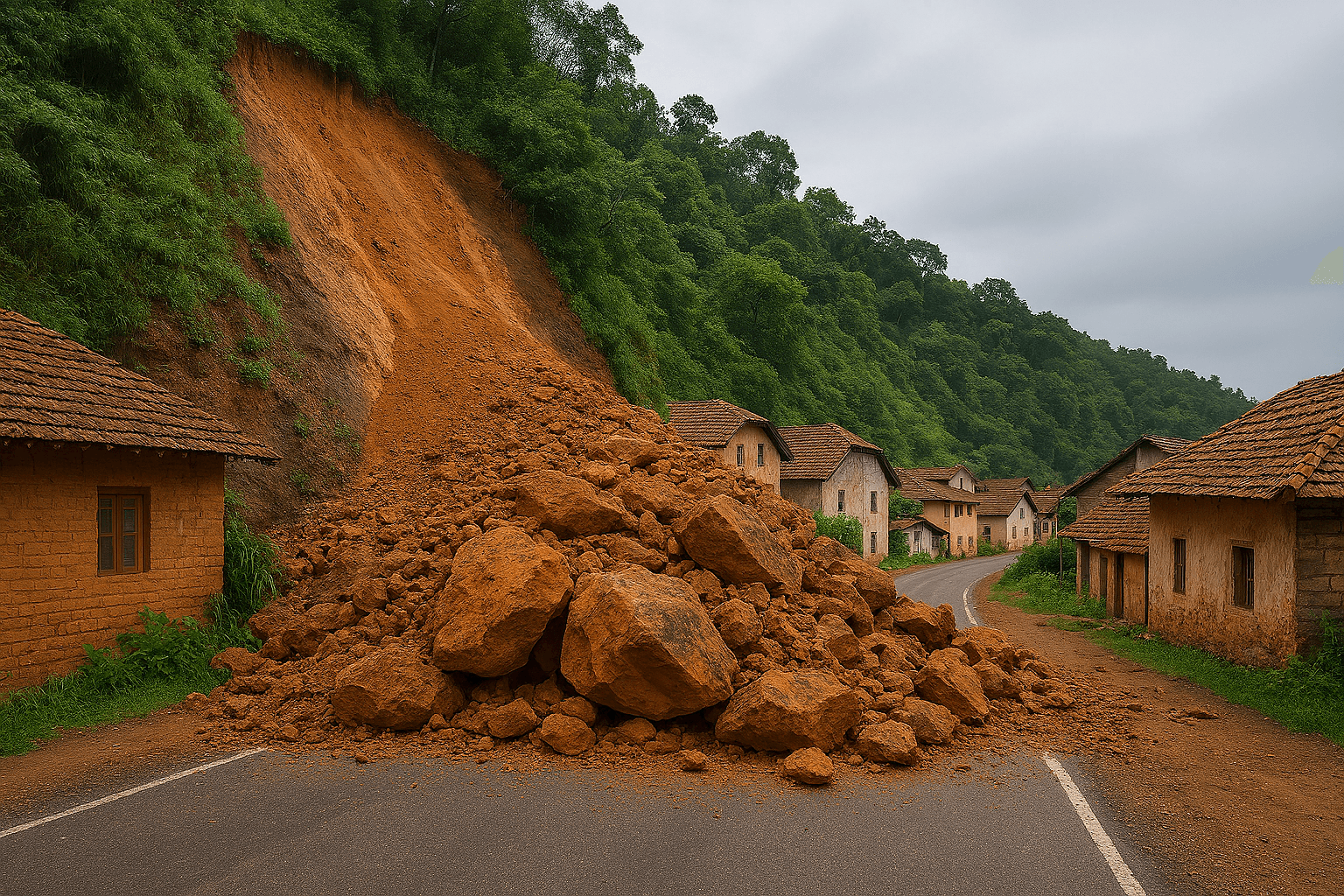
Human activities in steep, fragile mountain regions are destabilising slopes, resulting in frequent and fatal landslides, rockfalls, and debris flow incidents across the country, according to a study conducted by RMSI, a global Geographic Information Systems (GIS) consultancy firm. Drawing from field data collected during this monsoon season, the study highlights several hotspots in India where landslides are becoming an increasing concern These areas include Ramban in Jammu & Kashmir, Chamoli and Pithoragarh in Uttarakhand, Darjeeling in the Eastern Himalayas, and Idukki in Kerala's Western Ghats. The study identified a rising frequency of fatal landslides in these regions and noted, "A common factor across all these areas is significant land use change. Around 30 to 40% of the towns and cities in these areas have experienced rapid growth in built-up areas. Additionally, road infrastructure development and large-scale engineering projects, such as hydroelectric projects, have expanded considerably." The Char Dham road project in Uttarakhand was cited as an example of how human activities exacerbate landslides. According to the study, the project has damaged the fragile Himalayan ecosystem, creating new landslide-prone zones and further destabilising the terrain. RMSI's analysis of over 4,800 fatal landslides between 2004 and 2016, excluding those caused by earthquakes, revealed that more than 700 were linked to human activities. This indicates an alarming rise in human-induced landslides. During the monsoon season, regions that receive southwest monsoon rainfall and have slopes exceeding 20 degrees are especially vulnerable. The study explained that increased rainfall results in high water pressure within the slopes, making them prone to landslides. "Human activities worsen these effects, particularly through unchecked construction and development projects, which often ignore critical slope stabilisation measures. Key factors that increase vulnerability include deforestation, blasting, and excavation during road expansions, which create vibrations and destabilise the soil, leading to further slope instability," said Pushpendra Johari, senior vice-president at RMSI. The study also focused on the landslide-prone Ramban district in Jammu & Kashmir, where slope failures are more common along road corridors. Instability has worsened after recent construction activities. RMSI's study noted a surge in infrastructure development in landslide-prone states like Uttarakhand, where road density per 100 sq km nearly doubled between 2004 and 2019. The state also has the highest number of hydel projects (37) among India's five major hill states. An expert from RMSI told TOI, "Most landslides occur in areas with softer sedimentary rocks. Uttarakhand, Himachal Pradesh, Jammu & Kashmir, and the northeastern states are most affected due to their vulnerable geological composition." Of India's 28 states and nine union territories, 22 states and parts of Puducherry and the Andaman & Nicobar Islands experience landslides.
Nature